Lessons, courses and interventions for whole-school wellbeing
Browse classroom-ready resources from trusted providers. Filter by curriculum, year group, and module to find the right lesson or course for your setting.
Browse Curricula
Explore complete structured programmes from trusted providers.
8 curricula
Invest in You: Building Psychological Fitness
Invest in You: Building Psychological Fitness Flexible, self-paced professional development for educators Working in education asks a great deal of people: to think, adapt, respond, connect and care, often while managing pressure and change themselves. Invest in You is an evidence-informed professional development programme that helps educators understand and strengthen their psychological fitness — their capacity to regulate, recover and adapt through challenge, change and everyday life. This is not simply about “looking after wellbeing”, nor is it about expecting staff to cope better with unreasonable demands. It focuses on the human skills that underpin how we think, feel and respond. Across four foundation chapters, participants explore: what psychological fitness is and how it develops how emotions, attention and threat influence our responses how beliefs and interpretations shape how we feel and behave how flexible and realistic thinking can create more choice how energy, recovery and everyday practice support sustainable performance Through accessible psychology, relatable examples, guided reflection and practical strategies, participants connect the learning to their own lives, recognise existing strengths and identify small changes that can strengthen psychological fitness over time. The programme is designed around the realities of school life. Chapters are pre-recorded and self-paced, and can be completed individually, as part of whole-staff development, or used within INSET. The result is greater self-awareness, a practical personal toolkit and a shared language for psychological fitness that can extend across a staff team and wider school community. Because children learn not only from what adults teach, but from what the adults around them repeatedly model. Invest in the people who create the environment around young people. Practical information: Four pre-recorded, self-paced chapters for teachers, support staff and education leaders. Can be completed in one sitting or divided into shorter sections. Suitable for individual learning, whole-staff development or INSET.
Healthy Minds Compact Nursery to Year 6
Healthy Minds Compact Nursery to Year 6 is a developmental psychological fitness curriculum designed to help children build the understanding, skills and everyday habits that support them to regulate, recover and adapt through challenge, change and everyday life. The curriculum develops progressively from Nursery to Year 6. Children begin by experiencing and noticing simple skills through play, relationships and everyday interactions. As they grow, they develop greater emotional awareness, stronger communication and thinking skills, a deeper understanding of their strengths, and increasing ability to make deliberate choices about how they respond. Psychological fitness is taught as learning, not therapy. Children practise skills before they are urgently needed, so that over time those skills become more familiar and more available during everyday challenge. The curriculum is organised into four developmental stages. First Steps → Growing → Building → Strengthening The developmental journey Across Healthy Minds Compact, the curriculum develops with the child. Nursery - First Steps Experience and notice Children experience psychological fitness through relationships, play and everyday moments. Reception & Year 1 - Growing Experience, name and recognise Children develop simple language for what they are experiencing and begin to recognise skills in themselves and others. Years 2–4 - Building Understand, practise and choose Children begin to understand how emotions, thoughts, relationships, strengths and actions connect and develop a wider range of possible responses. Years 5–6 - Strengthening Reflect, choose and apply Children develop greater flexibility, agency and ability to apply psychological fitness skills intentionally in different situations. Browse the different stages.
Teach Mental Resilience
Children are growing up in a world that asks them to manage pressure, change, relationships and uncertainty from an early age. Academic knowledge matters, but it is not enough on its own. Teach Mental Resilience is Bounce Forward’s progressive primary curriculum, helping children build the psychological skills, language and self-understanding they need to navigate learning, relationships and life with greater confidence. Rooted in evidence and designed for real classrooms, it gives schools a practical way to make mental resilience part of everyday education from the start.
Healthy Minds
A full, evidence-based mental resilience and emotional wellbeing curriculum spanning five years of secondary school: 11 carefully sequenced modules, 70 structured lessons and one coherent developmental journey. Built on cognitive behavioural theory, positive psychology, neuroscience, and adolescent development research, Healthy Minds takes a spiral approach: introducing core concepts in Year 7 and returning to them with increasing depth as students mature. Topics range from how the brain works and emotional regulation, to media literacy, healthy relationships, physical resilience and navigating exams and life beyond school. What makes it distinctive is its evidence base an RCT tracking 10,000 students across five years and its commitment to practical, transferable learning. By the time students complete the curriculum, they've built a real inner framework for understanding their own mind, supporting others and sustaining their wellbeing under pressure. For schools, it offers something genuinely rare: a structured, progressive approach that treats young people's mental health not as an add-on, but as a core part of their development. It is possible to select and teach individual modules but it is important to know that all modules build on the skills taught in Resilience Skills Foundation.
Media Navigated for Primary
Media Navigator Helping children navigate the digital world with confidence Children are growing up in digital spaces that shape how they learn, play, communicate and understand the world. Information is always within reach, but knowing how to question it, interpret it and respond wisely cannot be taken for granted. Media Navigator is Bounce Forward’s six-lesson primary curriculum, helping children build the critical thinking, emotional awareness and practical skills they need to engage with digital media confidently and responsibly. Designed around children’s lived experience, it helps schools prepare pupils not simply to use technology, but to understand the world it creates around them.
Intentional Stillness for Primary
Intentional Stillness — Curated with Kate Kane Helping Children Find Calm in a World Competing for Their Attention In a world designed to grab children’s attention, teaching them how to find stillness is one of the most powerful things a school can do. Developed with Kate Kane and field experts, Intentional Stillness is a nine-lesson KS2 curriculum that helps children discover practical ways to become calmer, more focused and more present. At a time when screens and constant stimulation compete for young minds, these skills are not a luxury. They are essential.
Healthy Minds Compact
A Full Year of Psychological Fitness in Just 20 Minutes a Week Big results do not always need big amounts of time — just consistent, high-quality learning. Healthy Minds Compact gives schools a complete year of resilience and wellbeing learning through 36 carefully structured tutor-time activities. In just 15–20 minutes a week, pupils build the practical skills, shared language and self-awareness that support psychological fitness.
Resilient Transitions
Resilient Transitions — Using One Big Change to Build Skills for Life How children learn to navigate change can shape how they respond to challenge, uncertainty and new beginnings throughout life. Starting secondary school is one of the most significant transitions of childhood. New relationships, routines, expectations and environments can bring excitement, uncertainty, social pressure and worry — often all at the same time. Resilient Transitions uses this important real-life experience as an opportunity to build psychological fitness. Children learn practical skills to understand their emotions, regulate themselves, think more flexibly and realistically, connect with others, ask for help and make plans when things feel uncertain. These skills support children before they start secondary school, as they settle into Year 7, and long after the transition itself has passed. Because the aim is not simply to help children get through one change. It is to help them recognise: “I can understand what is happening, I have skills I can use, and I can adapt.” That learning can transfer to future changes, setbacks, new relationships, increasing independence and the many unfamiliar situations young people will encounter as they grow.
Discover what makes your school happy.
A free, evidence-based pupil wellbeing survey, with a report your school can celebrate and share.
Take part free
164 lessons
Browse classroom-ready Healthy Minds content.
Invest in You: Understanding Psychological Fitness
Chapter 1 - Understanding Psychological Fitness What are we building? Participants explore what psychological fitness means and challenge some common assumptions about resilience. The chapter introduces resilience as something more human than toughness or simply “bouncing back”. It considers adaptation, connection, learning from mistakes, impulse control and self-efficacy, and explores the relationship between emotional wellbeing, mental resilience and everyday life. Participants begin to consider psychological fitness as something developmental: not a fixed quality we either possess or lack, but a capacity that can be understood, practised and strengthened.
Invest in You: Emotions: Notice, Understand, Respond
Chapter 2 - Emotions: Notice, Understand, Respond What can I do with what I feel? This chapter explores emotions as signals: information about what matters, what feels threatening and what we may need. Participants consider why emotions are not simply “good” or “bad”, and how noticing both the type and intensity of emotion can support self-awareness, empathy and compassion. The chapter also explores our natural pull towards threat, alongside the role of optimism and positive emotion in broadening attention and building psychological resources. Participants finish by developing a practical toolkit of regulation strategies they can use and strengthen over time.
Invest in You: Flexible Thinking
Chapter 3 - Flexible Thinking What happens between the event and the response? This chapter explores how our interpretation of events influences how we feel and what we do next. Using the ABC model, participants learn to slow down and separate facts from interpretation. They explore common habits in thinking and learn to create more space between an event and their response. The focus is not on “positive thinking”, but on developing flexible and realistic thinking that opens up different perspectives and more choice in what happens next.
Invest in You: Energy & Recovery
Chapter 4 - Energy & Recovery Putting psychological fitness into practice This chapter explores the relationship between attention, emotion, energy and recovery. Participants consider four broad energy states — thriving, survival, recovery and burnout — and reflect on how they move between them. The focus is on recognising personal patterns, understanding what restores energy, and seeing recovery as part of sustainable performance rather than the opposite of it. The chapter brings the learning together through practical habits that support the capacity to regulate, recover and adapt, while recognising the influence adults have through what they repeatedly model.

Healthy Minds Compact: First Steps: Kind Hands, Kind Words
Children learn that kindness is something we do. Recognising and practising kindness through everyday actions.

Healthy Minds Compact: First Steps: Listen With Care
Kindness is something we do.
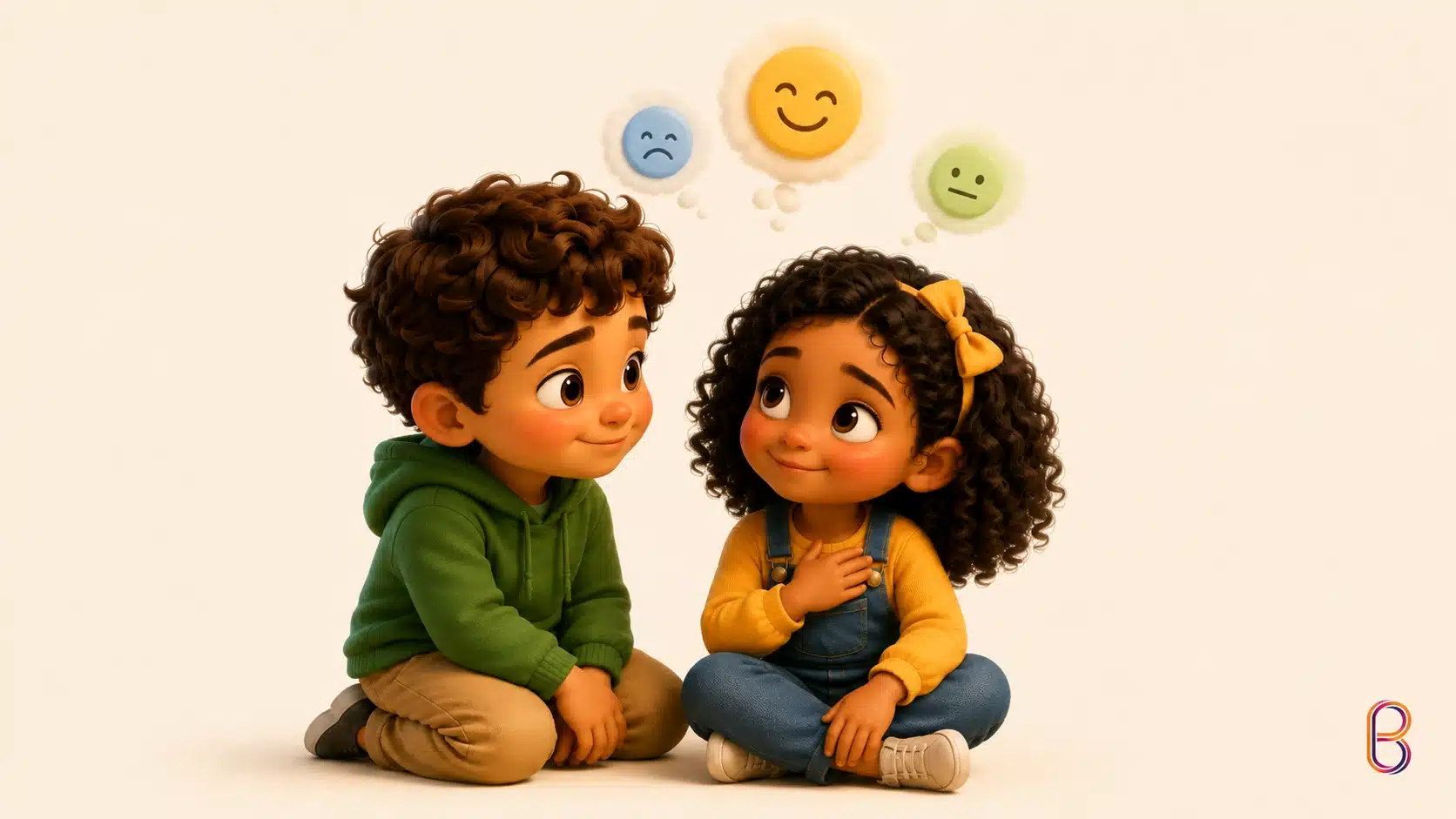
Healthy Minds Compact: First Steps: Name That Feeling
Children learn about emotions. Notice it. Name it. What or who might help?
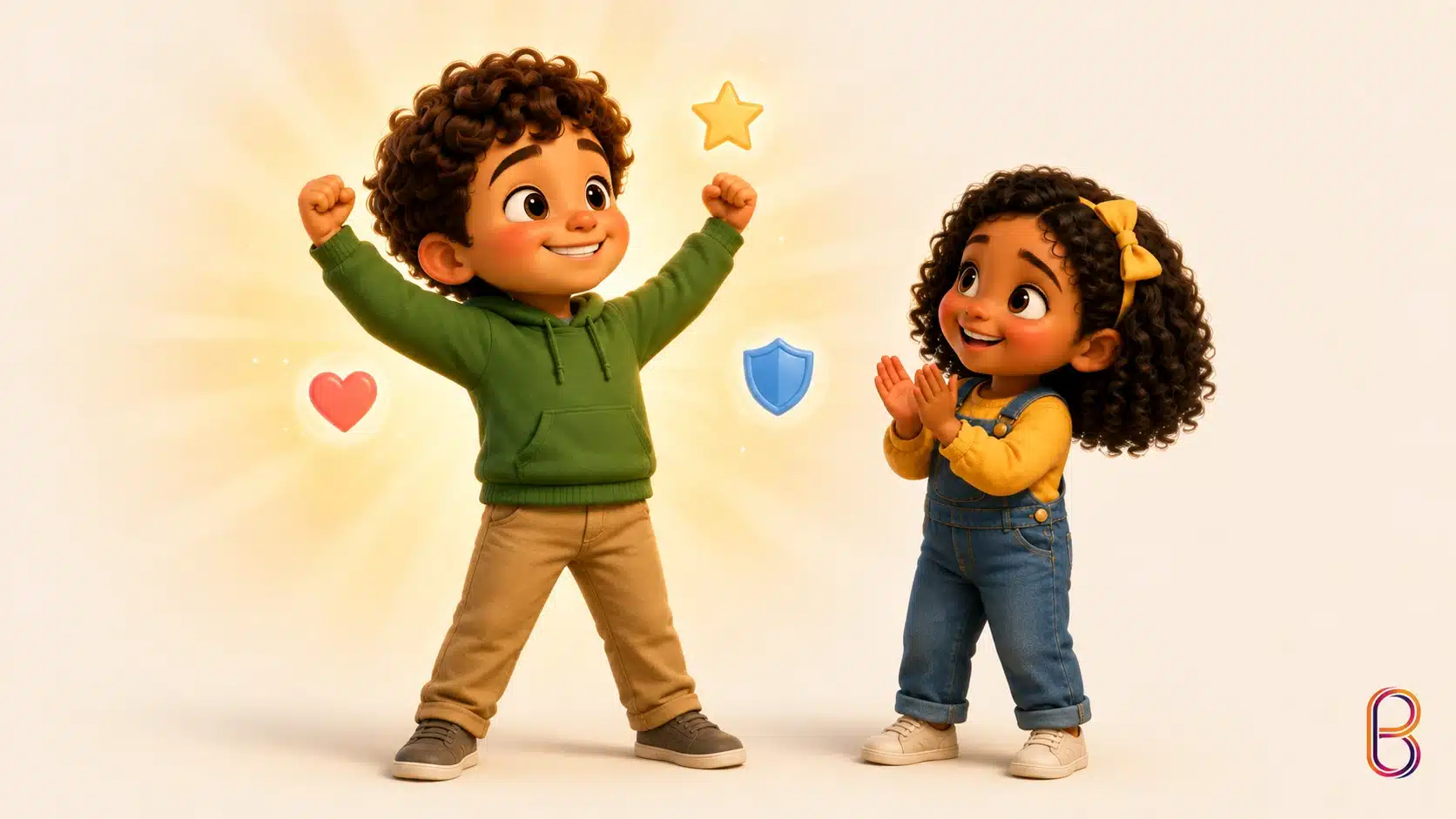
Healthy Minds Compact: First Steps: I Can Shine
Children learn about their indiviudal strengths
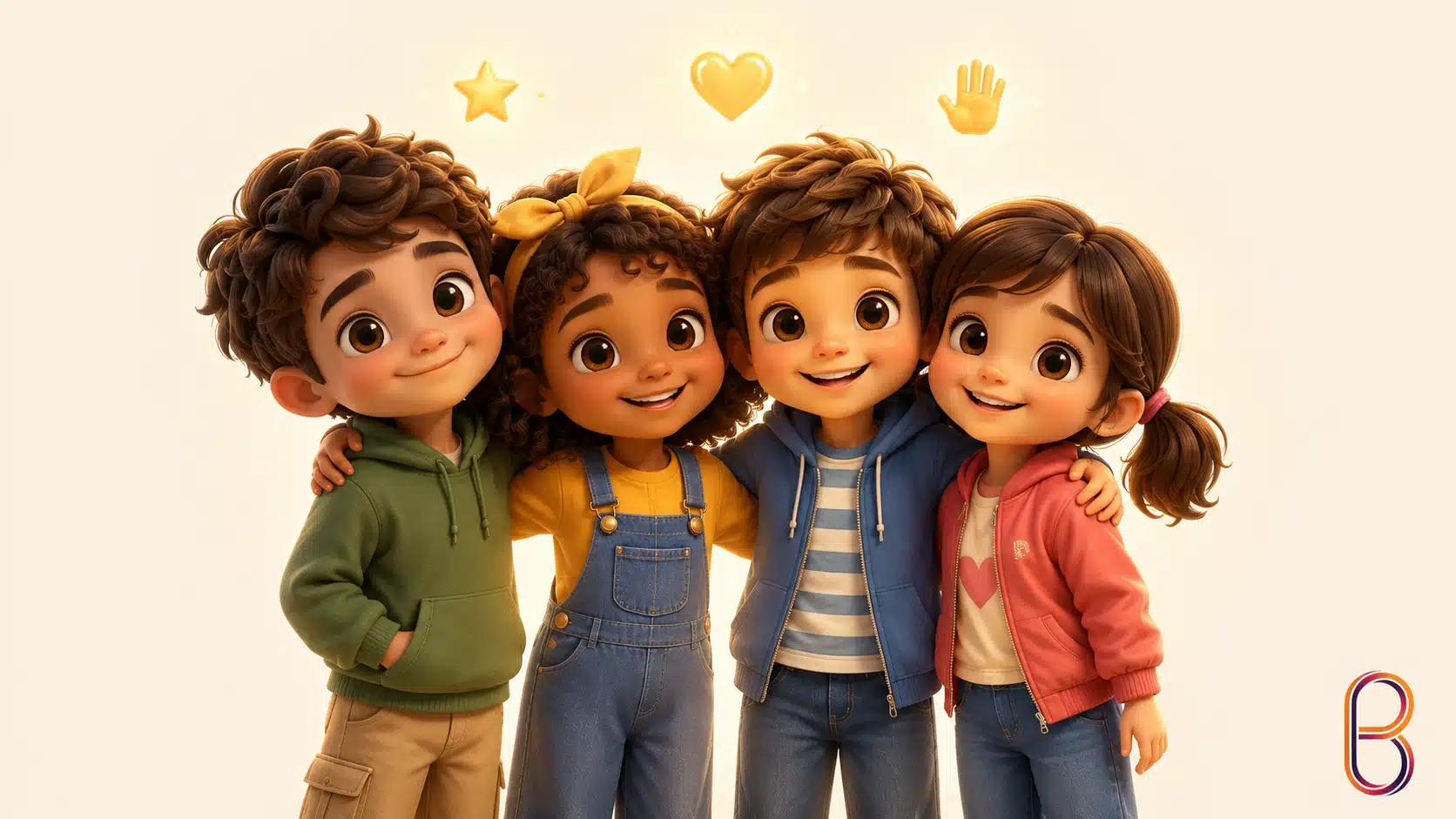
Healthy Minds Compact: First Steps: We All Shine
Children learn to notice strengths in each other.
Healthy Minds Compact: Growing: Kind Hands. Kind Words
Discover how kindness shows up in the things we say and do.
Healthy Minds Compact: Growing: Listen with care
Practise giving someone our attention and showing that we have heard them.
Healthy Minds Compact: Growing: Name That Feeling
Notice the clues our feelings give us and learn simple words for what might be happening inside.
Healthy Minds Compact: Growing: When I Shine
Discover that strengths are things we show through what we do.
Healthy Minds Compact: Growing: Things That Make Me Shine
Notice, share and celebrate the strengths we use in everyday life.
Healthy Minds Compact: Building: Kindness in Action
Children explore kindness as something we do, rather than simply something we are.
Healthy Minds Compact: Building - Name That Feeling
Children build emotional vocabulary and learn to recognise emotions as useful signals. Children are not taught that particular body signals always mean one emotion, or that there is one correct strategy for a particular feeling. They learn to notice, stay curious and build a range of possibilities.
Healthy Minds Compact: Building - Active Listening
Children explore listening as an active relationship skill rather than simply remaining quiet while someone else speaks. The emphasis is on attention rather than compulsory eye contact. Children can show listening in different ways. Core idea: Listen to understand, not simply to wait for your turn to speak.
Healthy Minds Compact: Building - Choosing What We Notice
Children are introduced to optimistic and pessimistic thinking as different ways attention can be directed. Optimistic thinking is not presented as ignoring difficulty or pretending everything will be fine. Children first acknowledge what is hard and then practise looking more widely. They use four practical questions: What is hard here? What else is also true? What can I control? What could I try next? Core idea: We can practise widening our attention when our thinking becomes stuck.
Healthy Minds Compact: Building - Choosing Helpful Stories
Children begin to explore the relationship between an event and the interpretation their brain makes of it. Children are not being taught to replace uncomfortable thoughts with positive ones. They are learning to become more flexible thinkers. A simple structure supports the learning: What happened? → What is my brain telling me? → What else could be true? → What could I do next? Core idea: The first story our brain tells us is not always the only possible story.
Healthy Minds Compact: Building - Me at My Best
Children explore strengths as qualities that become visible through actions. Instead of teaching children that they are “the brave one”, “the kind one” or “the clever one”, adults help them notice evidence: “You showed bravery when you shared your idea even though you felt unsure.” Core idea:Strengths are things we can notice, use, practise and grow.
Healthy Minds Compact: Building - My Happy Helps
Children explore healthy positive emotion as one useful part of psychological fitness. The aim is not to remove difficult feelings. Children learn that small, healthy experiences of enjoyment, connection, movement or play can sometimes help them meet difficulty with a more ready mind and body. Core idea: Happiness can be a tool — not a rule.
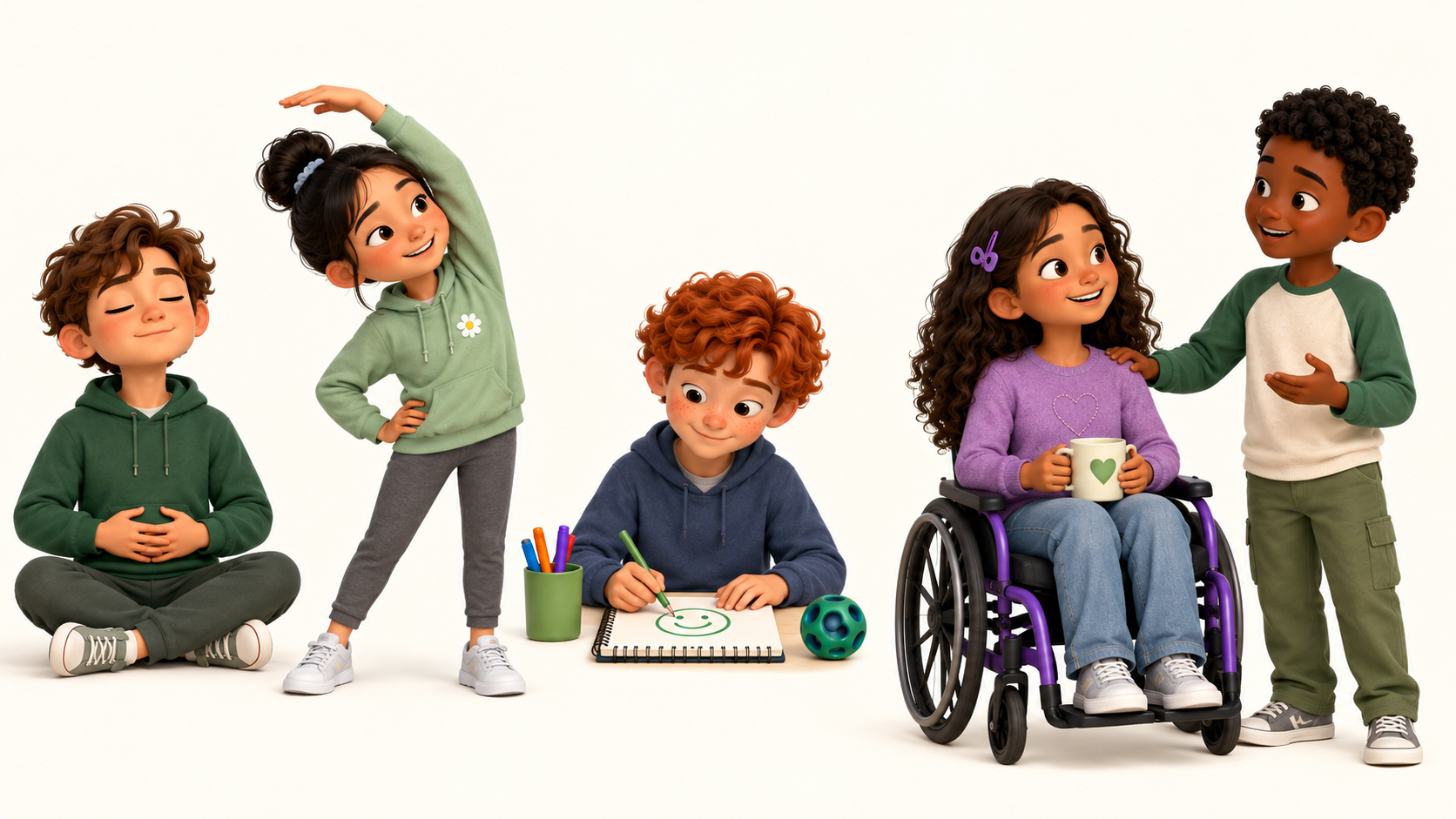
Healthy Minds Compact: Building - Regulation Skills Toolkit
The Regulation Skills Toolkit sits alongside the seven lessons. It gives children opportunities to practise simple regulation techniques before they urgently need them. The central message is: Notice what is happening → Choose a strategy → Try it → Notice what happens Children learn that different situations may need different approaches and that there is no single technique that works for everyone, every time. The toolkit introduces three broad types of strategy. Body skills Distraction skills. Connection skills. The goal is not to teach children one “correct” way to regulate. It is to help them develop a growing bank of choices and the ability to use those choices thoughtfully.
Healthy Minds Compact: Strengthening - Strengths: Me at My Best
Pupils explore what they are like when they are at their best and learn to recognise strengths through real examples of what they do, rather than simply choosing labels. They identify qualities they bring to different situations and consider how those strengths could support them as they grow and move towards Year 7.
Healthy Minds Compact: Strengthening - Understanding Emotions
Pupils develop emotional awareness by recognising emotions as signals, expanding the language they use for feelings and noticing how emotions can show up through body sensations, thoughts and behaviour. They also explore how the same emotion can look different in different people.
Healthy Minds Compact: Strengthening - Listening to Understand
Pupils experience listening as an active psychological fitness skill. Through practical activities, they practise giving full attention, pausing before responding, noticing verbal and non-verbal cues and checking understanding. They explore how listening can strengthen communication, relationships, trust and leadership.
Healthy Minds Compact: Strengthening - When Are Emotions Helpful or Unhelpful?
Pupils explore emotions without judging them as good or bad. They consider what an emotion may be signalling, how it can protect, motivate or guide us, and when its impact might begin to get in the way of useful action. Through different situations, pupils learn that context matters.
Healthy Minds Compact: Strengthening - The Stories Our Brains Tell
Pupils discover that our brains do not simply record events — they interpret them. They learn to separate observable facts from the story the brain adds, recognise common ways thinking can jump ahead and practise checking evidence and asking, “What else could be true?” This helps pupils develop greater flexibility in their thinking and creates more choice about what they do next.
Healthy Minds Compact: Strengthening - Choosing Optimism
Pupils explore how different ways of interpreting the same situation can influence what we notice and what we do next. They learn that we may not choose our first thought, but we can learn to notice it, consider another perspective and look for what is possible or within our control. Optimism is taught as realistic hope — not pretending that difficulties are not real.
Healthy Minds Compact: Strengthening - Celebrating My Strengths
Pupils return to their strengths with greater depth. Rather than simply identifying strengths, they consider which qualities come naturally, where they have seen them in action and which strengths they might choose to use more deliberately in future situations. They practise recognising and appreciating strengths in themselves and others and begin to see strengths as resources they can draw on intentionally.
Healthy Minds Compact: Strengthening - Sleep and Mental Fitness
Pupils explore sleep as an important part of psychological fitness. They learn that the brain and body remain active during sleep and that sleep supports learning, memory, emotional regulation, growth and recovery. Pupils reflect on routines and realistic choices that may help prepare the body and brain for sleep, without blame or judgement.
Healthy Minds Compact: Strengthening - Create a Mental Fitness Campaign
Pupils bring together learning from across Strengthening and use it for a real purpose. Working collaboratively, they identify something about psychological fitness that could help others, define an audience and purpose, develop clear messages and create a realistic call to action. In doing so, pupils move from learning about psychological fitness to communicating and applying it.
Healthy Minds Compact: Strengthening - Share a Mental Fitness Campaign
Pupils complete and share their Mental Fitness campaigns, explain the thinking behind their choices and practise giving and receiving constructive feedback. The lesson celebrates collaboration, communication and pupil voice, reinforcing the idea that psychological fitness can strengthen not only the individual but also the people and environments around them.

Teach Mental Resilience: Resilience & Harnessing Positive Emotions Primary
This foundational lesson introduces students to the concept of mental resilience and explores how positive emotions can be cultivated and used as a resource. Students learn what resilience means, why it matters, and how emotions — particularly positive ones — play a crucial role in building mental strength and wellbeing.
Teach Mental Resilience: Connecting the Brain, Emotions & Thoughts Primary
Students explore the relationship between the brain, emotions, and thinking patterns. This lesson demystifies how the brain processes emotional experiences and how our thoughts are deeply intertwined with how we feel, helping students understand the science behind their emotional responses.
Teach Mental Resilience: Introducing Gremlin Beliefs Primary
This lesson introduces the concept of 'Gremlin Beliefs', the unhelpful, often automatic negative thoughts and beliefs that undermine confidence and resilience. Students learn to identify their own gremlins and understand how these beliefs can hold them back, as a first step towards challenging them.
Teach Mental Resilience: Optimism & Evidence Primary
Building on the gremlin beliefs lesson, this session introduces optimism as a learnable skill. Students discover how to use evidence-based thinking to challenge negative thought patterns and cultivate a more balanced, optimistic outlook, not toxic positivity but realistic and grounded hope.
Teach Mental Resilience: WoBbLe The Big Worries Primary
WoBbLe is a memorable framework that helps students understand that life's ups and downs are normal and manageable. This lesson teaches students to embrace wobbles as part of growth and to use the WoBbLe model as a practical tool for maintaining balance during challenging times.
Teach Mental Resilience: Resilience Planning Primary
The culminating lesson of the Teach Mental Resilience course, this session brings together everything students have learned to create a personal Resilience Plan. Students reflect on their journey through the course and build a practical, personalised toolkit for maintaining and growing their resilience going forward.
Healthy Minds: Resilience Skills Foundation: Resilience & Harnessing Positive Emotions Secondary
This is the opening lesson of the Healthy Minds Resilience Skills Foundation module. It introduces students to the concept of resilience, the skills that help us navigate the inevitable ups and downs of life.
Healthy Minds: Resilience Skills Foundation: Connecting the Brain, Emotions & Thoughts Secondary
Students explore the neuroscience behind why we react the way we do. The lesson introduces a simple three-part model of the brain (Primitive, Feeling, Thinking) and explains how emotions and thoughts are connected.
Healthy Minds: Resilience Skills Foundation: Introducing Gremlin Beliefs Secondary
Building on the ABC framework from Lesson 2, this lesson introduces the concept of Gremlin Beliefs — four types of common unhelpful thinking patterns that distort how we see situations and drive negative emotions and behaviours. Students learn to identify these gremlins in scenarios and practise replacing them with more accurate, flexible thinking.
Healthy Minds: Resilience Skills Foundation: Optimism & Evidence secondary
This lesson teaches students to challenge Gremlin Beliefs by seeking evidence and thinking flexibly. Using an optical illusion, opinion-line debates, and a story (Mia and Ava at the arcade), students discover the difference between optimistic and pessimistic thinking, and learn that our brains can tell inaccurate stories when they lack evidence.
Healthy Minds: Resilience Skills Foundation: WoBbLe: Taming the Catastrophising Gremlin Secondary
This lesson focuses specifically on the Catastrophising Gremlin Belief — the tendency to snowball a small problem into a catastrophic chain of disasters in our mind. Students are introduced to the WoBbLe skill (Worst case → Best case → Most Likely), a structured thinking technique to bring balance to runaway catastrophic thoughts.
Healthy Minds: Resilience Skills Foundation: Resilience Planning Secondary
This is the final lesson of the Foundation module — a consolidation and celebration lesson. Students revisit all five resilience skills taught across the module through a structured review quiz, then create their own individual Resilience Plan that captures what they have learnt and how they will apply it in their lives.
Intentional Stillness: Introduction to Intentional Stillness
This is the introductory lesson of the Intentional Stillness module. It establishes what "intentional stillness" means — paying deliberate, purposeful attention to the present moment — and introduces the three types of intentional stillness practice: Bodily, Connection, and Cognitive.
Intentional Stillness & Anxiety
This lesson explores the link between intentional stillness and managing anxiety. Students learn about the brain's anxiety response (the amygdala), use the metaphor of a stress/anxiety bucket to understand what fills and empties their personal anxiety, and practise three forms of intentional stillness.
Intentional Stillness & Sleep
This lesson explores the specific link between intentional stillness and sleep quality. Students learn why sleep is especially important for teenagers, discuss recommended sleep hours and the consequences of sleep deprivation, and practise intentional stillness techniques designed to prepare the mind and body for rest.
Intentional Stillness: Connecting to Others
The final lesson of the Intentional Stillness module explores the deep link between human connection and mental health. Students learn about the social brain (specifically the insula) and how our connections with others influence our feelings and behaviours.
Media Navigator Introduction to Media Literacy & Social Media
This is the first lesson of the Social Media Investigated: Media Navigator module — a media literacy programme for Year 7. The lesson establishes a Safe Learning Agreement, introduces the concept of media literacy (access, analyse, create), and gives students practical experience deconstructing an advertisement (Kia Exercising Hamsters) to identify text, subtext, and target audience.
Media Navigator: Fantasy & Reality
This lesson explores how media blurs the boundaries between fantasy and reality. Students deconstruct a Lego advertisement for fantasy elements, analyse the McDonald's Big Mac Makeover video to understand how food advertising manipulates reality, examine the nature of reality television using The Biggest Loser as a case study, and begin exploring what it means to set boundaries online.
Media Navigator: Advantages, Disadvantages & Boundary Setting
This lesson builds on the boundary-setting discussion from Lesson 2 and extends it into a structured exploration of the advantages and disadvantages of social media. Students collaborate to generate their own advantages/disadvantages list, discuss whether social media turns people into performers, and work in small groups on a Social Media Scenarios activity — arranging scenario cards from most positive to most negative and discussing what boundaries would keep people safe.
Media Navigator: Benefits of Social Media
This lesson takes a deliberately positive starting point: research shows that beginning with benefits rather than drawbacks opens minds more creatively and leads to more lasting learning. Students explore how social media enhances communication, watch and analyse two videos ("I Forgot My Phone" and "Taking Control of the Trolls"), and work in small groups to create their own personal guidelines for using social media positively.
Media Navigator: Creating Identity Maps
This lesson and the following one form a two-part project focused on students reflecting on the online identity they want for themselves. The aim is not to have students carve out their online identity now, but to go through a thoughtful process of considering it alongside their peers.
Media Navigator: Presenting Identity Maps
This is the final lesson of the Media Navigator module and of the full Healthy Minds Year 7 programme. The classroom is transformed into a social media platform: students display their identity maps on the walls or tables, rotate around the room to view each other's maps and leave written comments (non-anonymously), then return to read comments on their own map.
Resilience Revisited: Revisit the Skills of Resilience
Recap of the five resilience skills (Harnessing Emotions, Noticing Gremlins, Reframing, Moving On, WoBbLe) with a focus on when and how to apply them in real-life situations.
Resilience Revisited: Optimistic Thinking
Explores pessimistic thinking patterns and how to replace them with flexible, realistic alternatives using the ABC model and Optimistic Alternatives Worksheet.
Resilience Revisited: WoBbLe Review
Reinforces the WoBbLe skill (Worst/Best/Most Likely case) to tame Catastrophising Gremlin Beliefs. Covers when WoBbLe is appropriate and introduces emergency response skills (999, recovery position).
Resilience Revisited: Assertive Communication
Introduces the four communication styles and a four-step Assertive Communication Technique. Students practise in pairs using real-life activating event scenarios.
Resilience Revisited: Moving On Skill
Introduces Confirmation Bias and how brains filter information to confirm existing beliefs. Students practise selecting the right resilience skill for different everyday situations.
Resilience Revisited: Empathy and Resilience Planning
Final lesson focusing on empathy vs sympathy, resilience mind-mapping, and consolidating all five resilience skills. Students create personal resilience plans.
From School to Life: Being Part of a Group and My Adult Self
Opening lesson building class rapport through group tasks. Students select images representing the adult they want to be across four life domains: work, family, lifestyle, and community.
From School to Life: Positive and Negative Role Models
Students identify positive and negative role models across the four adult domains and explore how these influences shape future success. Introduces the Future Me worksheet.
From School to Life: Bucket List and Timelines
Students create personal wishlist bucket lists then begin personal future timelines, identifying forks in the road, obstacles, and roadblocks between present day and adult goals.
From School to Life: Timelines Continued
Students complete and share personal timelines in small groups. Discussion draws out themes around planning, getting information, and breaking future goals into manageable steps.
From School to Life: Actions
Distinguishes dreams from possible selves and introduces specific action-setting. Students write clear, time-bound actions for each adult life domain linked to their timeline goals.
From School to Life: Possible Selves
Students create poster boards visualising their next-year positive and negative possible selves, then select strategies and actions to reach positive outcomes and avoid negative ones.
From School to Life: Adult Possible Selves
Extends possible selves thinking to the long-term adult future. Students complete the adult side of their poster board, connecting present actions to adult aspirations.
From School to Life: Solving Everyday Problems
Introduces structured problem-solving for everyday school-related challenges. Students apply resilience skills to real problems, recognising that seeking help promptly is a strength.
From School to Life: Looking Forward
Final From School to Life lesson connecting present choices to future goals. Students reflect on how resilience skills, role models, timelines, and actions work together to support their futures.
Media Influences: Introduction to Media Influences
Introductory lesson revisiting media literacy and setting context for Media Influences. Covers advances in social media, text vs subtext, and prepares students for critical analysis of gender, body image, health, and decision-making.
Media Influences: Media Gender Constructions
Examines how media constructs gender stereotypes. Students deconstruct adverts to identify target marketing, gender bias, and the influence of legislation on media representation.
Media Influences: Media and Body Image
Explores how media promotes unrealistic body ideals. Deconstructs fashion and fitness advertising, addresses body shaming, and develops body-positive, health-focused responses.
Media Influences: Media, Health and Food Marketing
Compares food product marketing against actual nutritional value. Students examine food targeting strategies, barriers to accessing healthy food, and structural issues in public health.
Media Influences: Media, Health, and the Marketing of Addiction
Investigates gambling product marketing and the links between gaming mechanics and addiction. Features a team quiz and scenario-based group discussion on gambling awareness.
Media Influences: Media and Decision Making
Examines how media directly influences consumer and personal decision-making. Students analyse persuasion techniques, build a media log, and develop strategies for more conscious decision-making.
Media Influences: Creating Media
Students design and create their own counter-adverts challenging a deceptive or harmful media message. Covers counter advertising concepts, deconstruction examples, and practical campaign production.
Media Influences: Presenting Media: My Counter Advert
Final lesson where students present their counter-adverts to the class. Discussion reflects on the full Media Influences module and how critical media literacy applies beyond school.
Physical Resilience - Exercise and Mental Health
This opening lesson of the Physical Resilience module developed with the Harry Kane Foundation. The resource explores the direct link between physical exercise and mental health. Students revisit the resilience skills from Year 7 (positive emotion, ABC, Gremlin Beliefs) and apply them specifically to their beliefs about physical activity. The lesson uses Harry Kane as a relatable ambassador and challenges students to identify and reframe unhelpful thinking patterns about exercise.
Physical Resilience: Nutrition and Mental Health
This lesson explores the growing evidence base for the link between what we eat and our mental health. Students learn about the gut-brain axis, the role of different food groups, and the barriers that prevent young people from eating well. Using Harry Kane as a relatable case study, they examine how nutrition choices directly impact physical and mental performance, then create a collaborative Mental Strength Nutrition Charter.
Physical Resilience: Sleep and the Adolescent Brain
This lesson explores why sleep is essential for adolescent mental and physical health. Students learn about the science of sleep — including the circadian rhythm, melatonin, Non-REM and REM sleep stages — and hear from both Harry Kane and Dr John Coleman (clinical psychologist and adolescence expert) on why sleep matters. The lesson culminates in students reflecting honestly on their own sleep routines and beginning a sleep diary.
Physical Resilience: Facts and Common Beliefs About Sleep
Building directly on Lesson 3, this lesson goes deeper into the science of teen sleep, the real impact of sleep deprivation, and — crucially — the common unhelpful beliefs that prevent young people from prioritising sleep. Students watch a second Dr John Coleman video, generate a class list of sleep myths, then use the reframing technique (linking back to Gremlin Beliefs and flexible thinking from Year 7) to challenge and replace those beliefs with more accurate alternatives.
Physical Resilience: Sleep Routines
The final lesson of the Physical Resilience module moves from understanding sleep science to taking practical action. Students watch Dr John Coleman's third video on sleep routines and how to overcome the melatonin effect, build a class list of healthy sleep routines, and create their own personalised sleep diary. The session closes with a final word from Harry Kane and a signpost to the National Sleep Helpline.
Mental Illness Investigated Defining Mental Health
The opening lesson of the Mental Illness Investigated series sets the foundation for a sensitive and rigorous seven-lesson exploration of mental health and mental illness. Students establish where to get support, build their initial understanding of what mental health means, draw parallels with physical health, and explore the idea that mental health exists on a spectrum that everyone moves along throughout their lives.
Mental Illness Investigated: The Science of Mental Illness
This lesson explores the biological and neurological basis of mental illness. Using a multi-section video ("Understanding the Biology of Mental Illness"), students learn about neurons, brain function, and how disruptions in brain networks and neurochemical messengers underpin mental ill health. PET scan evidence is introduced to show that mental illness produces observable physical changes in the brain — directly challenging the idea that it is "all in the mind".
Mental Illness Investigated: Understanding Mental Illness
This lesson moves from brain science to the lived experience of mental illness. Students explore the four most prevalent mental health conditions affecting young people — anxiety, depression, self-harm, and eating disorders — through a structured group research and presentation activity. Each group develops a character's diary entry to explore the real day-to-day impact of their assigned condition, then presents their findings to the class.
Mental Illness Investigated: Triggers, Protective Factors & Promoting Wellbeing
This lesson focuses on why mental illness develops — the triggers and risk factors — and, equally importantly, the protective factors and intentional actions that promote wellbeing. Students sort mental health fact-or-fiction cards, explore the Five Ways to Wellbeing, and challenge common myths and misconceptions. The lesson reinforces that looking after mental wellbeing is as intentional and important as looking after physical health.
Mental Illness Investigated: Spotting & Supporting
This lesson equips students with the practical skills to recognise early warning signs of mental illness in others, initiate supportive conversations, and signpost to appropriate help. Through the Mental Health Support MindMap, a Recognise the Warning Signs worksheet, the What Next worksheet, and real quotes from young people on how to talk to a friend, students build both the knowledge and the confidence to respond when someone they care about may be struggling.
Mental Illness Investigated: Healthy Coping Strategies
This lesson explores the range of ways people respond to difficult situations, thoughts, and feelings — distinguishing healthy from unhealthy coping mechanisms. Through the Healthy Coping Toolbox activity, paired case studies featuring three young people (Andi, Goldin, and Zane), and a personalised "Ideas to Try" worksheet, students build a practical toolkit of strategies to manage their own mental health and support others. The lesson reinforces that coping strategies are personal and that what works for one person may not work for another.
Mental Illness Investigated: Reducing Mental Health Stigma
The final lesson of the Mental Illness Investigated series addresses one of the most significant barriers to young people seeking help: stigma. Using an "alien" thought experiment to define stigma, two short videos (one humorous, one featuring young people sharing real experiences), and group work drawing on the See Me campaign's ideas for challenging stigma, students create a Class Charter of five commitments to reduce mental health stigma in their school community. The lesson closes with a Looking Back & Forwards reflection on the full seven-lesson series.
Resilient Relationships: Introduction
The opening lesson of the Resilient Relationships series reconnects students with the core Resilience Skills from earlier modules and applies them to relationships for the first time. Students revisit the ABC model (Activating event–Beliefs–Consequences) in the context of relationships, explore the full spectrum of relationship types, distinguish healthy from unhealthy relationships, examine the beliefs that help and hinder them, and build their understanding of healthy relationship foundations through a relationship triangle model. The lesson also covers the role of sex in relationships and the importance of building strong foundations before deepening connection.
Resilient Relationships: Healthy Boundaries
This lesson explores what healthy relationship boundaries are, why they matter, and how to set and communicate them assertively. Using the "Smart Love" framework, relationship scenarios, and the assertive communication technique revisited from Year 8, students practise boundary-setting conversations — including how to end a romantic relationship. The lesson also addresses toxic and abusive relationships, warning signs to watch for, and where to seek help if someone feels unsafe.
Resilient Relationships: Relationship Characteristics and Parental Responsibility
This lesson broadens the focus from romantic relationships to the responsibilities that come with parenthood, and deepens students' understanding of consent. A structured debate on common consent myths opens the lesson before students complete a relationship-type quiz. The lesson then shifts to parental responsibility — legal, emotional, and financial — culminating in a group activity where students consider everything that needs to be in place before bringing a child into the world.
Resilient Relationships: Big Sticky Beliefs and Relationships
This lesson introduces Big Sticky Beliefs (BSBs) — the deep, often invisible assumptions people hold about how the world should be — and explores how they differ from the situation-specific Gremlin Beliefs studied in earlier modules. Through the ABC model, case studies (Hannah, Jenny, and the recurring character Dennis), and reflective pair work, students learn to recognise when an overreaction in a relationship is being driven by an underlying BSB, and begin exploring their own world-view beliefs.
Resilient Relationships: Identifying Big Sticky Beliefs
Building on the introduction to Big Sticky Beliefs (BSBs) from Lesson 4, this lesson equips students with a practical technique - "what" questions, for identifying BSBs in themselves and others. Students begin with a relaxing music exercise, then explore their own world-view through anonymous sentence completions. Using the Bodhi case study and a set of "what" question prompts, pairs practise drawing out BSBs, before the lesson closes with personal reflection on times they have overreacted and what underlying BSBs might have driven those reactions.
Resilient Relationships: BSBs and Human Connections
This lesson deepens students' understanding of Big Sticky Beliefs (BSBs) by showing how they drive out-of-proportion reactions in real relationship situations, and then teaches students how to modify or challenge unhelpful BSBs. Through a Take 5 breathing exercise, short drama performances based on three relationship Activating Events, and guided evidence-checking using Lucas as a worked example, students practise noticing when a BSB is "in play" and reworking their ABC to reach a more helpful response.
Resilient Relationships: BSBs and Planning for the Future
The final lesson of the Resilient Relationships series brings together everything students have learned about Big Sticky Beliefs and resilience skills, and projects them forward into the future. Using the Lucas example as a bridge from the previous lesson, students consider how the BSBs they hold now could shape their lives in ten years' time, create a personal Resilience Plan, and reflect on the lasting benefits of the resilience skills for their relationships and wellbeing.
Resilient Decisions: Ambiguity, Complexity and Independent Thinking
The opening lesson of the Resilient Decisions series introduces students to decision-making in the context of ambiguity — situations where there is no clearly "right" answer. Through a drawing activity with a surprise marking scheme, personal dilemmas in pairs, and group dilemma discussions, students experience first-hand the discomfort of uncertainty and begin exploring how resilience skills can help them navigate it. The lesson closes with a breathing exercise using Robert Frost's poem "The Road Not Taken" to illustrate that all choices carry uncertainty.
Resilient Decisions: Assessing Risk and Opportunity
This lesson applies the ABC model directly to risk and opportunity scenarios, showing how Gremlin Beliefs can lead to poor decisions in both directions — giving in to peer pressure on risk, or backing away from genuine opportunity. Students learn the "Hot Seat" technique for disputing Gremlin Beliefs in the moment, and explore how peer influence — positive and negative — shapes real-life decision-making.
Resilient Decisions: Assertive Communication and Decision Making
This lesson returns to the assertive communication technique and extends it into the context of decision-making and negotiation. A morally complex friendship dilemma is explored through "Conscience Alley" — a physical drama activity where the class line up as pros and cons while one student walks between them as the protagonist. Students then practise assertive communication, negotiation, and empathy in small-group role plays, learning to communicate difficult decisions effectively even when others disagree.
Resilient Decisions: Decision Making in Romantic Relationships
This lesson applies the resilience skills to decisions specifically within romantic relationships, including sex and relationship safety. A Yes/No/Not Sure team debate on nine morally complex statements opens the conversation, before the ABC model is used to show how Beliefs drive decisions in potentially unsafe relationship situations. Students explore the beliefs that might lead someone toward or away from having sex, and the lesson closes with clear information on the forms of relationship abuse and where to seek help.
Resilient Decisions: Reviewing How We Make Decisions
The final lesson of the Resilient Decisions series consolidates everything students have learned through a creative group challenge: designing and pitching a "Decision Making App" for teenagers. This playful, competitive activity requires each group to draw on the full range of resilience skills covered across the series and articulate them in a two-minute pitch to the class. The lesson closes by summarising the five core benefits of resilience for decision-making.
Resilient Learners: Barriers to Success
The opening lesson of the Resilient Learner series applies the resilience skills to the experience of studying and exams. Students map their personal learning journey on a timeline, identifying highs and lows, what enables them to perform at their best, and the beliefs that helped or hindered them. The ABC model is briefly revisited through a relatable exam scenario to reconnect students with the link between thinking, feeling, and behaviour in an academic context.
Resilient Learners: Learning Priority and Strategies
This lesson helps students identify their personal strengths and weaknesses across four key learning capabilities, then learn from each other through a structured peer-teaching carousel. By self-assessing their confidence in Perseverance, Getting Going, Keeping It in Perspective, and Moving Forward, students group themselves by their strongest capability and take turns both teaching and learning from their peers, exploring the Beliefs that underpin each capability.
Resilient Learners: Learning Mindsets
This lesson introduces Carol Dweck's fixed versus growth mindset theory and frames it within the resilience skills language students already know (mindsets as clusters of Big Sticky Beliefs). Students explore their beliefs about intelligence through an Agree/Disagree scale, a mindset grid activity, paired role-playing of fixed and growth mindset responses, a short video about brain plasticity, and a group evidence-gathering exercise — building a compelling case for why a growth mindset is more helpful for learning.
Resilient Learners: Dealing with Anxiety
This lesson focuses specifically on how anxiety interferes with learning and exam performance, and reinforces two key tools for managing it: calming and focusing techniques (harnessing emotions) and WoBbLe (taming catastrophising Gremlin Beliefs). Through an ABC worked example where the Consequence is given first, students identify what Activating Events and Beliefs might be driving exam-related anxiety, then practise WoBbLe on three real exam-pressure scenarios.
Resilient Learners: Action Planning
This lesson brings together all four Learning Action Plans completed across the series and consolidates the skills into a personal forward-planning document. Students first practise using the skills "in the moment" through the Hot Seat activity with an exam-day social stressor scenario, then write a detailed personal plan covering Gremlin Beliefs, learning capabilities, strategies, support networks, and self-reward. The lesson closes with a Q&A opportunity and a summary of the five core benefits of resilience for learning.
Resilient Learners: Emotions, Energy and Performance
This lesson introduces the Emotions, Energy and Performance model from sports psychology — a four-quadrant grid (positive/negative emotion × high/low energy) that maps emotional states to performance zones: Thriving, Survival, Burnout, and Recovery. Students explore where their emotions currently sit, what beliefs keep them from prioritising recovery, and what practical actions they can take to achieve the right personal ratio of high performance and effective recovery — particularly in the lead-up to exams. The Five Ways to Wellbeing are revisited as a source of recovery ideas.
Resilient Learners: Strengths
The final lesson of the Resilient Learner series — and of the complete Healthy Minds curriculum — draws on the work of the VIA Institute on Character to help students identify and articulate their personal strengths. Through a focused listening exercise, a strengths card exploration, a small-group presentation, and a discussion connecting strengths to the Energy and Performance grid, students leave with a clearer sense of who they are at their best and how to use their strengths intentionally going forward. The lesson closes by encouraging students to use their strengths to write a personal statement for life beyond Year 11.
Media Navigator: Introduction to Media Literacy and Social Media Primary
This opening lesson sets the stage for the Media Navigated curriculum by introducing students to the concept of media literacy and examining the role social media plays in their lives. Students explore what it means to be a critical and informed media consumer in the modern digital landscape.
Media Navigator: Fantasy and Reality Primary
Students investigate the gap between curated online personas and real life. This lesson explores how social media often presents an idealised version of reality and helps students develop the critical thinking skills to distinguish between fantasy and reality in digital content.
Media Navigator: Advantages and Disadvantages of Social Platforms Primary
A balanced and nuanced exploration of social media's benefits and drawbacks. Students critically examine both the positive opportunities and the potential harms of different social platforms, building the knowledge base to make more informed choices about their own digital engagement.
Media Navigator: Benefits of Social Platforms Primary
Diving deeper into the positive side of social media, this lesson helps students recognise and leverage the genuine benefits of digital platforms — from building communities and accessing information to creative expression and social activism. Students learn how to use platforms intentionally and positively.
Media Navigator: Creating Identity Maps Primary
Students engage in a creative and reflective activity to map their online and offline identities. This lesson helps young people understand how their sense of self is constructed and how their digital presence relates to (and sometimes differs from) their authentic identity.
Media Navigator: Presenting Online Identity Maps Primary
The culminating lesson of the Media Navigated course, where students present and share their identity maps. This collaborative session allows students to discuss their digital identities, learn from each other's perspectives, and consolidate their media literacy skills.
Intentional Stillness: What is Intentional Stillness Primary
The introductory lesson for the Intentional Stillness curriculum explores the concept of stillness as a deliberate, purposeful practice rather than simply the absence of activity. Students discover why intentional stillness matters in today's fast-paced, always-on world and are introduced to foundational stillnessconcepts.
HM Compact: Knowing my unique qualities
Students begin their Healthy Minds Compact journey by reflecting on who they are at their best. Through a guided writing or drawing activity, they recall a moment when everything felt good - considering how they looked, sounded, felt inside and how others would describe them - before exploring their unique personal strengths.
Intentional Stillness: The Brain and Intentional Stillness Primary
Students explore the neuroscience behind the actions for stillness. This lesson explains how intentional stillness affects the brain — from reducing stress hormone levels to strengthening neural pathways associated with focus, emotional regulation, and wellbeing — giving students a scientific foundation for the practice.
HM Compact: What is resilience, what it means and why it is important
Students discover what resilience is and why it matters throughout life. They explore what resilience looks like through famous examples. Then, define it for themselves, understanding it as the ability to recognise opportunities, learn from failure, regulate emotions, think flexibly and connect with others.
Intentional Stillness: Extending Intentional Stillness Primary
Building on the foundational practices, this lesson helps students develop and deepen their stillness practice. Students explore a range of techniques and learn how to extend moments of stillness throughout their day, making it a sustainable and integrated part of their routine.
HM Compact: Understanding how kindness connects with mental fitness
Students explore the science behind kindness — how acts of kindness boost dopamine and serotonin, strengthen social connection, and create a ripple effect of wellbeing. Through a kindness mindmap activity, students then design a personal kindness action plan for the week ahead.
HM Compact: Building vocabulary for the range of emotions that I can feel
Students build their emotional vocabulary by brainstorming and then exploring a wide range of emotions — from happy, optimistic and confident, to sad, anxious and frustrated. They consider the physical signs emotions produce and what situations might trigger them, deepening their self-awareness.
Intentional Stillness: Using Intentional Stillness to Deal with Anxiety Primary
This lesson applies intentional stillness specifically to anxiety management. Students learn how anxiety manifests in the body and mind, and how stillness practices can be used as an immediate and longer-term tool for reducing anxiety and building emotional resilience.
HM Compact: Identifying when emotions are helpful and unhelpful
Students learn that no emotion is simply 'good' or 'bad' — every emotion carries information and can be either helpful or unhelpful depending on the situation. Through story-writing, they explore how the same emotion (such as excitement or boredom) can produce very different outcomes.
Intentional Stillness: Understanding My Stress Bucket Primary
Using the 'stress bucket' metaphor, students visualise how stress accumulates and how different coping strategies — including intentional stillness — can help to manage and drain their bucket before it overflows. This lesson makes abstract stress concepts concrete and actionable.
Intentional Stillness: Using Intentional Stillness to Aid Sleep Primary
Students explore the connection between stillness, relaxation, and sleep quality. This lesson provides evidence-based strategies for using intentional stillness to improve sleep hygiene, helping students understand why good sleep is fundamental to mental health and how to create better pre-sleep routines.
HM Compact: Having bodily techniques to calm down unhelpful emotions
Students learn why strong emotions can feel overwhelming, exploring the role of the amygdala in triggering survival responses. They are introduced to the three types of calming techniques (bodily, distraction and social) and begin practising bodily techniques — starting with breathing exercises — to calm strong emotions.
Intentional Stillness: Exploring Sleep Routines Primary
Extending the sleep theme, this lesson dives deeper into the science and practice of healthy sleep routines. Students audit their current sleep habits, learn about circadian rhythms, and develop concrete plans for improving their sleep through intentional stillness and better sleep hygiene.
HM Compact: Having distraction techniques to calm down unhelpful emotions
Students revisit bodily techniques with a new breathing practice (Pursed Lip Breathing) before being introduced to distraction techniques. They explore how deliberately shifting attention away from strong emotions — through engaging activities — can restore calm and focus, and practise a distraction technique together.
Intentional Stillness: Connecting to Others Primary
This lesson explores the social dimension of wellbeing, examining how our connections with others affect our mental health and how intentional stillness can improve the quality of our relationships. Students discover how being truly present transforms interactions and deepens connection.
HM Compact: Having social techniques to calm down unhelpful emotions
Students consolidate their understanding of the three types of calming techniques and focus specifically on social techniques — the power of human connection to soothe strong emotions. They map their own human connections and practise equal breathing, exploring how reaching out to others supports emotional regulation.
HM Compact: The link between thoughts, feelings and behaviour
Students are introduced to the ABC model: Activating Event (the facts of a situation), Beliefs (the story the brain tells), and Consequences (how we feel and behave as a result). Working in pairs, they practise applying the model to a range of activating events, discovering that different people can think very differently about the same situation.
Intentional Stillness: The Social Brain & Gratitude Primary
The final lesson of the Intentional Stillness series brings together the social and neurological themes of the programme. Students explore the neuroscience of gratitude, learning how practising gratitude activates positive brain circuits and enhances social bonds — leaving them with a powerful, evidence-based tool for lasting wellbeing.
HM Compact: Understanding how I think
Students deepen their understanding of the ABC model by applying it personally — exploring how their own beliefs about the same activating event can lead to very different emotional consequences. Using the scenario of a cancelled trip, they compare how thinking SAD, ANGRY or OK produces entirely different responses.
HM Compact: Recognising unhelpful thoughts
Through a quiz featuring famous people who succeeded after repeated failures — including rejected filmmakers, fired executives, and authors told they had no talent — students discover that the brain can make mistakes and tell unhelpful, fixed stories. They begin to recognise how negative, rigid thinking can make us want to give up.
HM Compact: Sharing my unique qualities with others
Students return to the unique strengths they identified in Lesson 1 and take time to reflect more deeply on what makes them who they are. They then share and celebrate their qualities with others, building a sense of mutual recognition, belonging and confidence within the group.
HM Compact: Nurturing my optimistic muscle
Students explore the difference between optimistic and pessimistic thinking, learning that optimism is not about pretending everything is fine — but about recognising possibilities and choosing to move forward. They practise nurturing an optimistic mindset through activities that strengthen this 'muscle' over time.
HM Compact: Avoiding thinking traps that make us give up or stop
Students are introduced to 'Gremlin Beliefs' — fixed, unhelpful thinking patterns that can trap us and cause us to give up. They learn to recognise these traps in everyday situations and practise strategies to avoid or challenge them, building resilience against the thoughts that hold us back.
HM Compact: Knowing what makes me feel happy
Students take time to reflect on the experiences, people and activities that genuinely bring them joy and happiness. They explore the evidence that experiencing positive emotions is beneficial for both mind and body — and consider how they can intentionally bring more of these things into their everyday lives.
HM Compact: Understanding the link between sleep and mental fitness
Students discover what actually happens in the brain during sleep — including memory consolidation, emotional processing and physical restoration — and explore the research linking quality sleep to mental fitness, mood, concentration and resilience. They build awareness of how their own sleep may be affecting how they feel.
HM Compact: Setting healthy habits for sleep routines
Building on their understanding of why sleep matters, students now focus on the practical side — identifying what helpful sleep routines look like and exploring how small, consistent changes can make a real difference. They take ownership of their own sleep health by developing personalised strategies.
HM Compact: The benefits of analogue and digital spaces for emotional wellbeing
Students consider the emotional wellbeing landscape of their lives — both online and offline. They weigh the advantages and disadvantages of social media and begin to think about what healthy boundary-setting looks like for social platforms, developing their own informed perspective on digital versus analogue life.
HM Compact: Create guidelines for positive use of social media
Students deepen their exploration of analogue and digital spaces, considering the specific benefits and drawbacks each offers for emotional wellbeing. They use this thinking to create their own personal guidelines for using social media in a positive, intentional way that supports rather than undermines their wellbeing.
HM Compact: Explore social media
Students explore the genuine positives of social media — how it supports communication, connection and creativity — while also creating personal guidelines for using it well. The goal is a balanced, critically informed view of social media as a tool that can be used positively when approached with awareness.
HM Compact: Catching sight of thoughts that snowball
Students are introduced to the concept of catastrophising — the Gremlin that tells us the worst possible story about a situation. They learn to notice when their thoughts are 'snowballing' and getting out of control, developing awareness of this pattern as the first step towards interrupting it.
HM Compact: Creating a mental balance
Students learn the WoBbLe skill — a structured technique for taming catastrophic thinking by working through Worst case, best case, and most likely outcome. They practise this alongside other calming techniques to create mental balance when thoughts begin to spiral, building a practical toolkit for emotional regulation.
HM Compact: Learning to dial my strengths up and down
Students revisit their unique strengths and develop a more nuanced understanding of them — recognising that even genuine strengths can sometimes work against us if overused or applied in the wrong context. They explore how to 'dial' their strengths up or down depending on the situation to perform at their best.
HM Compact: Using my strengths in the difficult moments
Students apply their self-knowledge to challenging situations — exploring how their unique strengths can be deliberately drawn upon when things get hard. Through reflection and activity, they build self-awareness about what it truly means to be mentally resilient and how their strengths are part of that.
HM Compact: Feeling connected to others
Students explore the fundamental human need for connection and discover that even small talk plays a meaningful role in building a sense of belonging. They examine how feeling connected to others is a two-way exchange — something we both give and receive — and reflect on the connections in their own lives.
HM Compact: Expressing gratitude to the people around me
Students explore the research linking gratitude to mental fitness and positive wellbeing. They put this into practice by writing a gratitude letter to someone who has made a difference to them — an activity that builds emotional awareness, strengthens relationships, and boosts mood for both writer and recipient.
HM Compact: Understanding the different types of social connection
Students examine the landscape of their social world more closely, discovering that connection comes in many different forms — from close friendships to community ties and everything in between. They map and reflect on their own different types of social connection and consider what each means to their wellbeing.
HM Compact: The art of listening
Students discover that listening is a learnable skill — and a crucial one for building genuine connection. They explore what active listening really means (beyond simply hearing words) and practise it through structured pair activities, developing a communication skill that strengthens relationships and supports others.
HM Compact: Using process praise
Students learn about process praise — the practice of praising effort, strategy and progress rather than fixed ability or outcome. They discover why this form of encouragement builds resilience and a growth mindset, and practise using it with each other, shifting the way they give and receive feedback.
HM Compact: Expressing empathy and compassion
Students explore what empathy and compassion mean in practice — the difference between feeling with someone and extending care towards them. Through scenario-based activities, they practise expressing empathy and compassion in authentic ways, building the interpersonal skills that underpin strong, supportive relationships.
HM Compact: Understanding different communication styles
Students learn that the way we communicate is shaped by the beliefs we hold about ourselves and others. They explore three distinct communication styles — passive, aggressive and assertive — and develop understanding of how each style plays out in real situations, laying the groundwork for more effective, respectful communication.
HM Compact: Exploring hope for my future
Students are introduced to the three elements of hope: goals (knowing where you want to go), agency (believing you can get there) and pathways (knowing how to get there). They apply this framework to their own lives, exploring what they genuinely hope for and beginning to connect hope with action.
HM Compact: Setting personal goals for who I want to be in future
Students move from hope to action by learning how to set meaningful personal goals. They practise creating goals that are rooted in their values and vision for who they want to become — developing the skill of translating aspiration into concrete, achievable intention.
HM Compact: Setting goals that will benefit my school community
Students expand their goal-setting beyond themselves and consider what it means to contribute to the wellbeing of their school community. They set goals designed to benefit others — building a sense of responsibility, social purpose and the understanding that resilience includes caring for those around us.
HM Compact: Creating a school campaign
Students bring together everything they have learned across the programme to create a campaign promoting positive mental fitness and emotional wellbeing in their school. They learn what makes a campaign effective and work creatively to design content that communicates key messages to their peers.
HM Compact: Sharing campaigns
In the final lesson of the programme, students collaborate to finalise their campaigns and present them to others. They give and receive constructive feedback, celebrating what they have created and consolidating the knowledge, skills and confidence they have built across all 36 lessons of Healthy Minds Compact.
Resilient Transitions: Life is a Journey
Before children can embrace what's ahead, they need to feel safe enough to talk about it. The first lesson sets the tone for the whole series — creating a safe, honest space where feelings about change are welcomed, not dismissed. Pupils explore what it really means that life is a journey, share what they're genuinely looking forward to, and begin to name the emotions that come with stepping into the unknown. They're introduced to Finger Breathing as their first practical calming tool, and create their own personal safe space — a grounding resource they can return to whenever things feel overwhelming. From the very first session, pupils leave with something real and useful in their hands.
Resilient Transitions: Thoughts and Feelings
It's not what happens to us that shapes how we feel. It's what we tell ourselves about it. Through the stories of Tia and Tomas, pupils are introduced to one of the most powerful ideas in the whole series — that our Beliefs about events, not the events themselves, drive how we feel and behave. This single insight can change everything. Using the ABC model, pupils begin to see the gap between what happens and how they respond — and realise that gap is where their power lies. They meet the Gremlins for the first time: the Me voice that says it's all your fault, the Them voice that says it's nothing to do with you, and the Always voice that says it will never get better. Recognising these patterns is the first step to not being controlled by them. A focused maze activity closes the lesson with a practical experience of deliberately directing attention — a skill that underpins everything that follows.
Resilient Transitions: Making Choices
Our brains take shortcuts. Sometimes those shortcuts lead us straight to the wrong conclusion. Building on what pupils now know about ABC and the Gremlins, this lesson goes deeper — exploring how our thinking style shapes the choices we make and the stories we tell ourselves. Through Tia and Tomas, pupils spot Gremlin Beliefs in action and begin to understand the difference between pessimistic and optimistic thinking, not as personality types, but as habits that can be changed. An Observation Test film brings the lesson to life with a surprising demonstration of how easily we miss what's right in front of us — because our minds are already decided. From there, pupils learn to think like detectives, actively seeking multiple explanations for events rather than defaulting to the first (often harshest) belief that shows up. Worksheets give pupils the chance to practise reframing their own Gremlin Beliefs, and the lesson closes with visualised breathing — leaving them calm, grounded and a little more curious about their own thinking.
Resilient Transitions: Taking Control
When change feels overwhelming, having the right tools makes all the difference. This lesson is where the toolkit really starts to take shape. Pupils learn three practical strategies they can reach for whenever things feel out of control — and each one is immediately usable in real life. First, a gratitude letter — a simple but powerful way to strengthen the relationships that matter most, especially when everything else is shifting. Then WoBbLe, one of the most memorable tools in the series, which teaches pupils to balance the catastrophising voice in their head by deliberately considering the best case alongside the worst — and landing on what's most likely. Suddenly the thing that felt unbearable looks a lot more manageable. A visualisation exercise then gives pupils a way to step back from strong emotions and view them from a distance — creating space between feeling and reaction. The lesson closes with the Five Ways to Wellbeing, and pupils make a personal pledge to put them into practice — leaving not just with knowledge, but with a commitment to themselves.
Resilient Transitions: Making My Transition Plan
Everything they've learned. Everything they've practised. Now it all comes together. The final lesson is a moment of genuine celebration and consolidation. Pupils revisit what resilience really means and recognise — often with surprise — how much of it they've already built over the course of the series. They connect these qualities directly to the transition ahead, reframing secondary school not as something to survive, but as somewhere they are genuinely ready for. A 'Me at My Best' activity helps pupils build a clear, positive picture of who they are and what they bring — the kind of self-concept that carries young people through uncertainty with confidence rather than fear. From there, they look forward, imagining themselves thriving in their new school. The lesson culminates in each pupil creating their own personal Transition Plan — drawing together every tool from the series into something uniquely theirs. Their calming techniques, their ABC thinking, their Gremlin reframes, their WoBbLe, their gratitude practice, their Five Ways to Wellbeing. Not a worksheet to hand in. A resource to keep, return to, and use. They arrived at lesson one not sure what was ahead. They leave lesson five ready for it.